
Craig Has The Scout - Maryland 2026
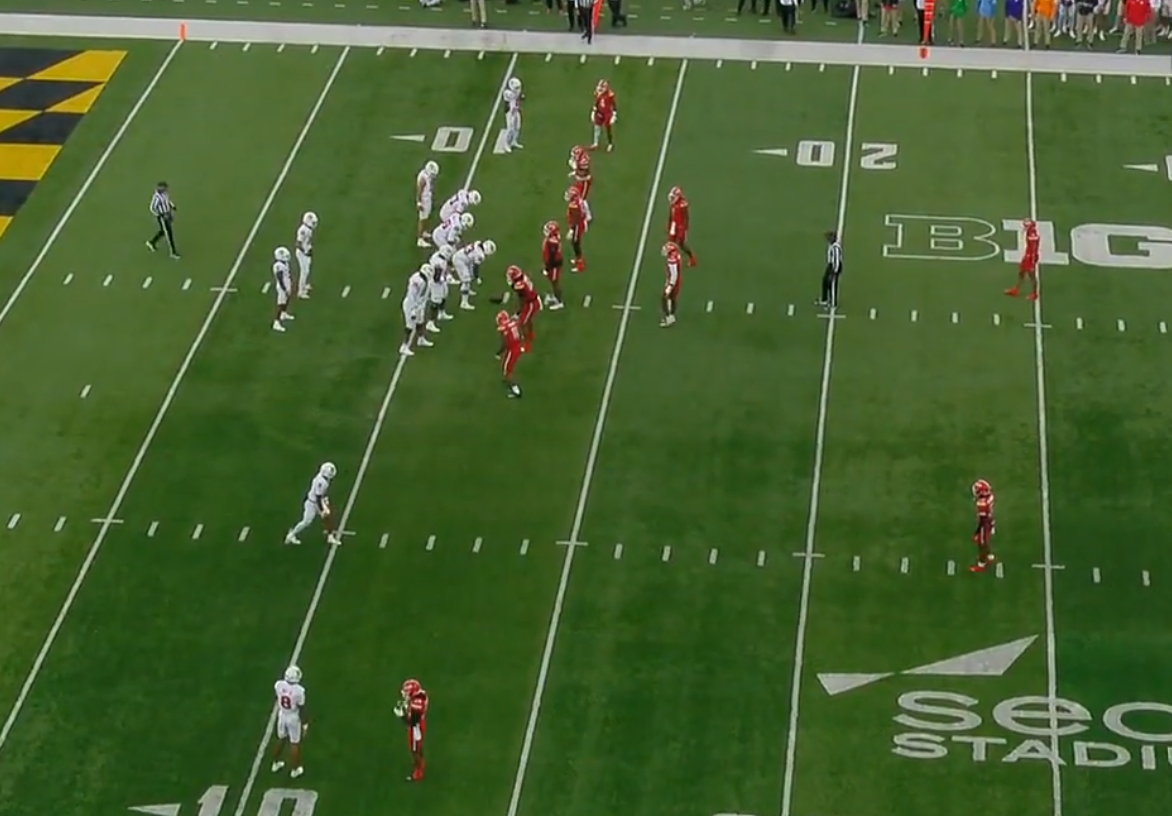
Coming Up
Who: Maryland Terrapins
When: Saturday, October 31, 2026 at 11:00 AM
Where: SECU Stadium in College Park, Maryland
How: FS1
Opponent Primer:
Head Coach: Aazaar Abdul-Rahim
Mike Locksley spent eight years proving that if you hand a coach half the DMV's blue-chip talent and a healthy pile of booster cash, he can reliably make every season irrelevant by October and allow you to plan your weekend around 11 a.m. BTN kickoffs. He leaves behind top-25 recruiting classes, bottom-half B1G results, and enough off-field headaches to keep compliance officers employed for years. Maryland didn't fire Locksley so much as pay a $10M buyout to stop showing up solely as a recruiting infographic.
Enter Aazaar Abdul-Rahim. He started the Rutgers week as a defensive backs coach. On Sunday he was named interim DC and then became interim head coach in about the time it takes Maryland to blow a two-score lead. If he shows up in a nicer suit around the football facility, he may be the AD by next Tuesday.
All this is happening in the Halloween season, a time for the eerie and scary. Which is the best way to describe turning over your program to an ace recruiter who last led a program at the high school level. Anyone who once argued Illinois should have given Cory Patterson a chance after Lovie Smith now gets a live-action case study. Maryland has made the interesting decision to turn over a Power Two program over to a staff built on guys more comfortable in recruits’ living rooms than the sideline.
That doesn't mean Abdul-Rahim can't succeed. It does mean he inherited one of the worst situations imaginable. His best players are already evaluating their offers for next season, while the staff is seeking out lifelines elsewhere. It’s not just the football team, the administration is offering free tuition to a student to make it through an entire game. Making people want to stay in College Park is a challenge for the entire university.
Abdul-Rahim broke into the FBS ranks under Nick Saban in 2014 and may have pulled out of this nosedive if Maryland had appointed him a month ago. But the speed of the promotion makes this look less like succession planning and more like an athletic director bestowing the job on the first adult he saw after making the firing. For this weekend, Abdul-Rahim is being asked to stabilize the program, convince four-stars not to flee, and determine whether College Park is the place his coaching career begins or ends. In the spirit of the season: Trick or Treat, Coach.
Mostly trick.
Offensive Style: Tempo Pro-Style with side splits and motion
Clint Trickett retired as a player after suffering five concussions in 14 months, ending his career with a medical file thicker than his highlight reel. He ironically started coaching as the quarterbacks coach at East Mississippi JUCO during the Last Chance U era before spending three seasons as Lane Kiffin's tight ends coach at FAU. Trickett wasn’t there for his offensive acumen, merely as a recruiting connection. Kiffin left for Ole Miss, leaving Trickett behind as his offensive acumen and recruiting chops didn’t translate to the SEC. Willie Taggart promoted Trickett to co-offensive coordinator alongside Drew Mehringer (late of the Oregon Ducks), pairing two inept offensive minds. That offense finished 115th nationally in scoring, and FAU moved on after one season.
Charles Huff, an ace recruiter himself, then hired Trickett at Marshall as a receivers coach and later promoted him to offensive coordinator when Tim Cramsey left. The first year went well enough, producing the Sun Belt's second-best rushing attack. The second year went significantly worse and ended with another dismissal. Clay Helton brought him to Georgia Southern as tight ends coach and passing game coordinator, a title that sounds important until you realize someone else still had the actual offense. Jacksonville State eventually handed him the OC job to help lure his father Rick, the famously intense offensive line coach. It created what may be the only coaching arrangement where the offensive coordinator got chewed out by his own position coach. Last December, Ryan Silverfield hired Trickett as Arkansas' quarterbacks coach. By February, Trickett bailed, betting on himself and taking the offensive coordinator job at Maryland. He is now 35 years old, calling plays for a head coach who was beneath him on the org chart two weeks ago, while doing little to quiet the critics who see nepotism every time they look at his résumé.
Trickett's offensive philosophy centers on making defenses defend "every blade of grass." The offense is built on Air Raid principles, wide receiver splits, stretched formations, and a quarterback capable of making difficult throws from one hash to the opposite sideline. Art Briles would be proud. The spacing creates one-on-one matchups and running lanes, two things that happen to fit the skill set of QB Malik Washington. Washington has the arm talent to make the far-hash throws and the athleticism to turn a broken play into a coordinator's migraine. Trickett wants to play fast, targeting 70 to 90 snaps per game in an effort to wear down defenses while keeping a deep group of skill players involved. He spent much of the offseason preaching balance after Maryland's pass-heavy approach under Pep Hamilton in 2025. The reality has been more modest. The Terps still throw the ball on 57 percent of their snaps, and Washington ranks second on the team in rushing attempts. Trickett previously spoke about the offense being “100% collaboration” with Locksley, now is the time to see what happens when he is unsupervised.
Defensive Style: Hybrid 4-2-5 / 3-3-5 Flex with Split-Safety Shells & Match Quarters
Zac Spavital started as a graduate assistant under Bob Stoops at Oklahoma and then joined Kevin Sumlin in Houston, where he coached defensive backs for seven seasons and watched the Cougars burn through defensive coordinators like a cafeteria burns through napkins. Skladany, Stewart, Bryant and Gibbs all came and went while Spavital stayed put and recruited. He followed David Gibbs to Texas Tech to work for Kliff Kingsbury, another Houston connection, and spent four seasons coaching linebackers in the Big 12 at a time when defense often felt like a suggestion. From there he went to Texas State to join the new head coach, his younger brother Jake. The partnership was memorable mostly for producing a 13-35 record before Jake was fired after the 2022 season.
Spavital landed at Maryland as a safeties coach under Mike Locksley, where he reunited with Sumlin. Every Spavital stop seems to come with at least one old Houston colleague. He later moved to inside linebackers, outlasted both Brian Williams and Ted Monachino, and was elevated to co-defensive coordinator alongside Aazaar Abdul-Rahim after the Rutgers loss. Three days later, Locksley was fired. Abdul-Rahim moved into the interim head coach role, leaving Spavital in charge of a defense that currently ranks 127th nationally in scoring. The good news is the bar is so low he shouldn't trip over it.
The Terps have primarily operated from a 4-2-5 structure with two stand-up edge defenders, a setup that looks similar to what Illinois saw against Oregon. Spavital's background bounces between 4-2-5 and 3-3-5 systems, but the common theme is creating takeaways. His defenses have consistently generated turnovers, from Houston secondaries that piled up interceptions to Texas Tech linebacker units that attacked the football and a Texas State pass defense that cracked the national top 25 in 2019. He's also a multiple-front coach by training, having worked with both three-man and four-man structures throughout his career. Expect disguise, pressure, and personnel flexibility rather than a rigid base defense.
The immediate challenge is much simpler than scheme. Maryland has allowed a 100-yard rusher in all four B1G games and has been outscored 92-13 in the second half of those contests. That's less a coverage issue than a tackling and run-fit issue. Spavital gets one bye week and five games to find out whether a takeaway-focused philosophy can work when opponents have no problem running through a leaky front.
Three Things to Watch