
College Football 201
It's time for a class you'd take your sophomore year. Yes, you had College Football 101 as a freshman in Foellinger and you'd always get a seat in the balcony so you could take a little nap. But now it's time for a more advanced class.
And I'm gonna unlock this post because it needs to be something you can share. Consider this one of those courses that a university puts all the lectures online because they consider the information to be important. This is about educating generations. Or something. Let's get started.
Yes, I saw the Block I tweet. They deleted it and apologized so I'm not going to share any of the screengrabs that are floating around. If you didn't see it, they made the mistake of suggesting that the early departure of the students on Saturday was because our playoff hopes were lost. It was basically the professional sports fandom concept: once you're eliminated from the playoffs, what's the point of attendance? Saturday was just.. a late September baseball stadium in Pittsburgh.
This class here – College Football 201 – is to help you to understand that college football is different. I'm going to try to cover a semester's worth of material in 2,000 words, so this will go quickly, but it's very important that you understand what brought us to this point. Both as college football fans and Illini football fans.
Let's start with...
The Bowls
You can't discuss college football history without discussing bowl games. "Bowl" is literally referring to stadiums shaped like a bowl (very specifically, the Rose Bowl in Pasadena). The best way to think about all of this is through the stadiums.
There was enough interest in postseason, around-the-holidays college football matchups that Pasadena built a giant bowl and Dallas built the Cotton Bowl and New Orleans built the Sugar Bowl and Miami built the Orange Bowl (and so on). Most of those games are played in NFL megaplexes now (well, not the Rose Bowl), but the original concept was "the best college teams play in this massive stadiums over the holidays." You wanted to win your conference and you wanted to win a bowl game. "National Championship?" Who cares?
That line of thinking lasted for a long time. I always use the example of our 1992 matchup with Michigan. Illinois led 22-19 late in the game thanks to 11 Michigan fumbles (they lost 5 of them). #3 Michigan, with no losses and one tie on the season, had 4th down in the Illinois redzone with less than a minute left. Go for the touchdown and they keep their national title hopes alive (two ties would eliminate them in the eyes of the voters). Kick the field goal and they'd wrap up the Rose Bowl and a Big Ten title regardless of what happened against Ohio State the following week. They kicked the field goal and took the Rose Bowl, eliminating themselves from the national title picture.
Michigan head coach (and former Illini head coach) Gary Moeller was very specific about it at the time. He spelled it out in a postgame quote:
"There was no doubt in my mind what I would do under the circumstances. I made up my mind the day before the game that if needed, I would go for a tie to clinch the championship and the Rose Bowl.
"I didn't want to risk everything by throwing an interception. And if we had come up short and lost, it would have put all the pressure on the team in having to win against Ohio State to get in the Rose Bowl. I couldn't take a chance on that happening."
So start there. That's 1992. Bill Clinton had just been elected President over George H. W. Bush. And a college football team said "stay alive in the national title hunt? Nope. Give me the Rose Bowl, please."
I'm not saying that's the case today. There's not a coach on earth who would make a bowl decision over a playoff decision today. Especially with the system having changed in the last 30 years to emphasize one true national champion. But it's important that you understand that history before we talk about...
The Number Of Teams
The part where everyone seems to get confused – the reason that Block I tweet maybe sounded like a good thing at the time – is because all sports center around playoff appearances and championships. A fan in Chicago knows that the bar to clear for the Bulls is to make the playoffs and the dream is to win a championship. They know that the bar to clear for the Bears is to make the playoffs and the dream is to win a championship. So why would the bar to clear for Illinois football not be to make the playoffs with the ultimate dream being winning a championship?
My answer: Because the NBA has 30 teams, the NFL has 32 teams, and college football has 136 teams. This cannot be some kind of scenario where the bar to clear for the NFL is to finish 56th percentile or higher (14 teams in the playoffs out of 32 total) and the bar to clear for a college team is 91st percentile or higher (12 teams out of 136). It just can't.
I mean, look at the NBA. 20 of the 30 teams at least make a play-in game while 16 of the 30 "make the playoffs." Even in college basketball, 68 teams "make the playoffs." And we're saying that college football is "top-12 or the season is a lost cause"? No. I reject this outright. A November college football game after a team has three losses is not a September baseball game after the Pirates are 31 games out.
There are, obviously, levels to all of this. Ultimately, yes, only one team wins the title, so if, say, the Bears make the playoff this year and win in the Wild Card round but lose in the Divisional round, That Guy at the bar will be making the argument that while you might be happy with a playoff appearance and a single playoff win, he's not happy until it's a title. You're all just "willing to accept a lower bar than him." The easiest fan position in all of sports is "win a title every year or you have failed me." You just sit on your throne and demand titles or firings.
And it's that line of thinking that leads to "make the CFP or the season is meaningless." Yes, at Illinois. I first noticed it last year during the Oregon game. Both of these tweets that I quote-tweeted here were later deleted by those users, but both were deeming our 2024 season a failure as we were trailing on the road to #1 Oregon. One said that any bowl game outside of the playoff is "meaningless garbage." So I kind of processed it all out loud:
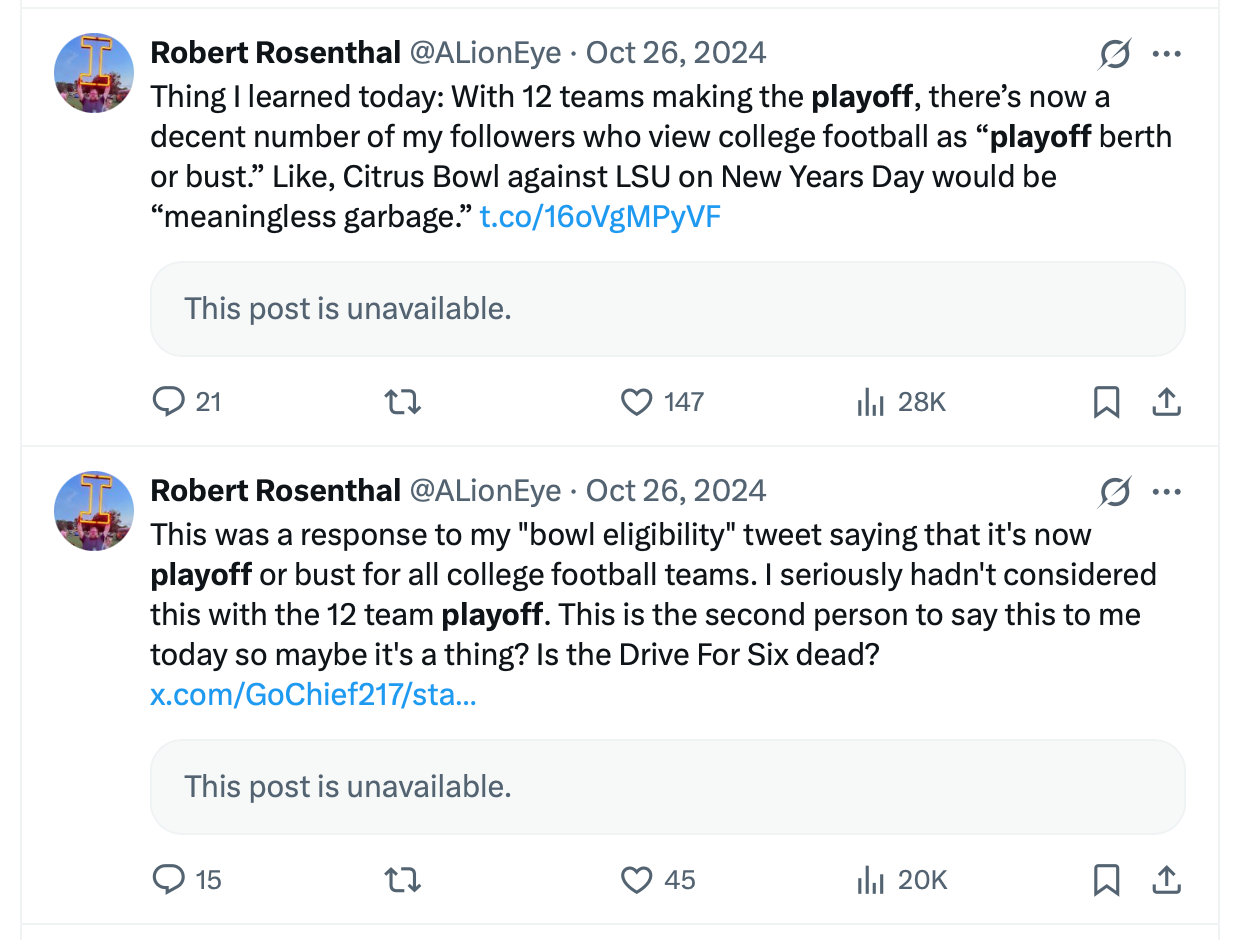
In the year since, I've made it my mission to fight that line of thinking with article after article and tweet after tweet. This just cannot become the default. Even if you reject that all 136 teams have no chance at a title (they don't), there are 68 power conference teams plus several G5 schools like Boise State who compete near that level. And "finish top-12 of those 72 teams" CANNOT be the bar. It's the goal, but it's not the bar to clear.
It's not the bar.
Why This Is Important
Go back to the "bowl games" thing. This was a sport that originally sought to pair conference winners for bowl trophies, not all teams for one trophy. That's woven deep into the fabric of college football. You can't think of it like 32 NFL teams fighting for the Lombardi Trophy. It was... 10 Big 10 teams and 10 Pac 10 teams fighting to get to (and win) the Rose Bowl. Big 8 teams wanted to win the Orange Bowl. SEC teams wanted to win the Sugar Bowl. Basically, they were NFL-like scenarios where the AFC (the Pac 10) and the NFC (the Big Ten) would put their champions against each other in the Super Bowl (Rose Bowl).
It's why your father and grandfather resisted the playoff while you were screaming
"why are we letting the voters decide - we need a real playoff!" It's because the goal, for decades, was never "who is the single best team?" That has changed now, and I'm on board with a playoff, but you have to remember why these "meaningless garbage" bowl games exist.
Think of the NCAA Tournament. That's the bar for college basketball teams. Coaches keep their jobs or lose their jobs based on whether they make the Tournament. More specifically, at the power conference schools, the bar to clear = the 37 at-large bids. Win one of the five main conferences or get one of the 37 at-large bids. The bar to clear for college basketball: be one of those 42 teams.
And the bar for college football is 12? Get out of here.
(Sorry, I forgot this was a class. You can stay.)
Hear me now. There are still conference titles in college football. It will be a very big deal for Western Michigan fans if they win the MAC championship game. If Texas Tech wins the Big 12, they will display that trophy forever. That's the kind of thing where I'd buy two shirts if we won a conference title and wear one of them at least every third day. I cannot accept that being equated with "the Colts beat three other teams to win the AFC South every fan will buy two shirts." Conference championships matter in college football.
AND BOWLS MATTER. Our Citrus Bowl win was a huge, huge deal. Michigan beating Alabama in Tampa was a huge deal (and basically rescued a terrible season for them). The Las Vegas Bowl with USC vs. Texas A&M was high level football. And just like "made the playoffs in the final Wild Card spot" was a springboard for the Denver Broncos last season, the Birmingham Bowl was a springboard for both Vanderbilt and Georgia Tech.
Yes, at some point, college football might see some kind of top tier consolidation to where it's just the best Big Ten teams playing the best SEC teams for the title. And at that point, begrudgingly, yes, it would be 30-some teams all trying to make 12 playoff spots for one championship. It would then essentially be the NFL model.
But until that time, there are still 136 teams eligible to win it all at the start of the season (with a path to the title game for Florida International and everything). Conference titles still mean a ton (from the SEC to the Sun Belt). Yes, the playoff sorts out a true winner now, but the playoff isn't the end-all, be-all. The Citrus Bowl, for the rest of this decade at least, will be the "which team really should have been in the playoff?" bowl game. And we won it last year.
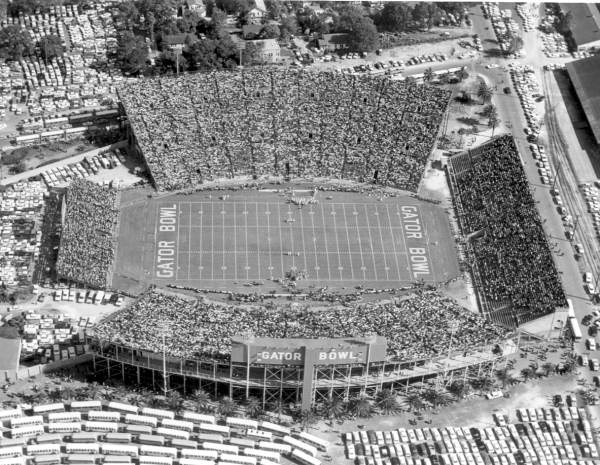
I'll close this out by pointing you back to the stadiums. If you want to understand the true history of college football, why would Jacksonville, Florida build this?
And why would Pasadena, California build this?
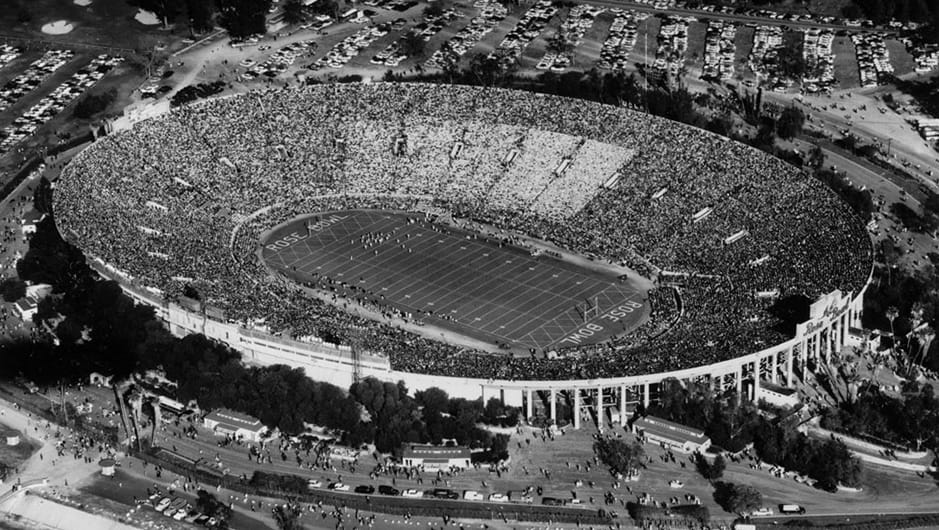
Who builds a stadium for one game per year? Seriously try to answer that question. The Gator Bowl hosted both the annual Florida-Georgia game and the actual Gator Bowl, so I guess that's two games per year, but seriously think about these stadiums without a home team playing there (UCLA didn't start using the Rose Bowl until 1982, if you're curious). Every answer to "how is college football different?" is found when you ponder that question.
MLB is about the summer. NFL is about the fall. NHL is about the winter. NBA is about the spring. NCAA Basketball is about March.
And NCAA football is rooted in "spectacle around the holidays." It's why the playoff had to be centered around the bowls. And it's why the other bowls matter. Yes, I agree, that the StaffDNA Cure Bowl between Ohio and Jacksonville State is really stretching the word "spectacle" (although probably not to the Jacksonville State me), but there's deep history surrounding everything from the Citrus Bowl to the Holiday Bowl. And most younger fans don't seem to realize it. That was always the point of the college football season: get to the best bowl game you can so that your players can spend their semester break on a beach somewhere.
OK, that's it for today, class. Remember that next week is Thanksgiving Break so we won't have class again until December 2nd. The topic that day? Why the hash marks are wider in college than they are in the NFL.
And remember, extra credit for anyone who brings me a photo of themselves at the Northwestern game.
Comments ()